
You have got Leads. Now make them 4X More Effective.

There are 4 simple yet highly effective strategies for improving sales effectiveness and improving your chances of converting a lead to a deal. Speed: Strike when the iron is hot Shocking truth: In a survey done across 350 companies, 38% took more than a full day to respond. In the fast-paced world today, the speed of response is of the essence; this is succinctly explained through the adage ‘Strike when the iron is hot.’ The lead is open to being nurtured and led further in the funnel if your response time is quicker. The more you let the dust settle down on the lead, the more difficult it gets to convert him. Even the difference between 5 minutes and 30 minutes could mean death in the form of a dead lead. So make sure you set and communicate your response time and follow it through. Persevere: Never say die Shocking truth: 53% made no more than two attempts at contact and gave up after that. There are reams written about how if you hang in there and keep trying, success can be all yours. All of it is every bit true. A sale or a deal is lost not because it was dead, but because the salesperson did not try enough times or gave up far too soon, especially when he was far too close to closing it. The 2-word mantra for every sales person to convert a lead should be persisted and persevere. Even if you have to try for the 8th time or beyond, do so, as this will get you a higher response rate Embrace personalizing Shocking truth: 30% had no element of personalization in their emails. Messages, emails, professional calls tend to impact the personal touch, often making the sales call impersonal and cold. Personalizing the message, call or email makes all the difference in the world as it immediately puts the recipient in an open, receiving mode. Well begun is half done, as they say. The more elements of personalization you add in your communication, the more likely the recipient will click through and open and read the email. The content of the email should also be carefully tailored to suit the recipient as much as possible to garner more responses. It has been proven that personalizing messages make it 137 percent more likely that the recipient will open the email and respond. Perform or perish Shocking Truth: 58% were likely to miss the email at least 10 percent of the time. Checking how the email or your communication works and correcting course to make it work better, is very important. The effort deserves its dues, but so do the results. Performance needs to be the objective and the checkpoints of all your communication. Just as it is true in every aspect of business, it is true here – perform or perish! The truth, as we clearly can see above is that companies are nowhere close to the ideal strategies of follow-up; but they need to get there soon. Else the chasm between a lead and a deal will keep widening. “Act now!” should be the anthem and the action.
When Should you Go for Sales Enablement Tools?

As per industry figures, only a third of the sales team meet their quota, and just a few exceed it. So how does an organization get its sales team to deliver a great performance? Simple answer really- get in new tools to help your sales team. Empirical evidence shows that the right sales enablement technology implemented correctly, at the right time, makes the difference between lead, deal, and a loss. Organizations need sales enablement tools for a superlative sales performance. And the perfect time to do it is when you see any of the following happenings in your organization. Onboarding time for new salespersons exceeds the average Thousands of dollars are spent and hundreds of man-hours invested in getting the new salespersons get up to speed in their onboarding. And despite this, the performance is average or even poor. The right sales enablement tool can help cut this time by 30 to 40 % while ensuring the right content and knowledge of products and services are at hand for the new sales team to move ahead with confidence, sound knowledge and perform well. Productivity is suffering due to less time spent on core selling Sales productivity is a challenge, has been one, for a long time for many B2B companies When sales productivity dips, revenue is heavily impacted. The primary cause of this decline is attributed to the sales team performing more functions other than core selling. Usually, these tasks are routine, non-core and repetitive. Perfect candidates for automation. A good example would be a CRM that helps automate major such tasks and increases productivity by at least 30%. A blanket approach to sales The buyer is getting smarter and more demanding. If sales are using a blanket approach to selling, then it is the seller’s loss, for certain. To stem the loss and to transform the selling process vis-à-vis the changing buyer scenario, it is critical to get into automation. These tools can help tailor the offering or solution based on buyer persona, preferences while also tailoring the content, messaging and interaction timing between the salesperson and buyer. Sales strategies have to take this into account to ensure that the sales team meets the buyer one-on-one, thus improving effectiveness. Taking the sales further in the journey is a problem There is a cost attached to not taking the sale further in its journey, in time and in the right manner. Often, salespersons are not aware of how to do it; they get stuck after a point, or maybe they are not so sure about the next step in certain situations. Sales enablement tools like relationship mapping come to the rescue once again by helping the salespersons with the right help through persona-based selling tips, just-in-time coaching, and effective collaterals. These are also instantly accessible to any of the sales team members. Sitting on the fence ends up in more losses than anything else It is incredible to note that anything up to 50% of the sales forecasts ends up as a no-decision. Something that is neither here nor there and as time lapses, the decision goes the wrong end of the funnel and is declared as a lost deal. It is interesting to see that this happens because, in many cases, it is easier to do nothing. “Why challenge the status quo?” is always a better proposition. With sales enablement tools, it is easier to overcome the status quo. This happens by offering value. The more the salesperson gets to the depth of the prospect and understands his business, addresses his pain points, the more the engagement between the salesperson and the buyer. This often results in a deal. Sales enablement tools help salespersons by guiding them on how to build a case, helps them to engage the prospects with value-added content and help them to advance the deal. The right content at the right time is not available to the sales team A survey shows that 90 percent of content is not used. Where we know that impactful content influences 95 percent of B2B sales, sales teams say they never have the right content on hand when they want it. As a result, sales teams waste valuable time away from core selling and in finding the right content or creating it themselves. With sales enablement tools, real-time data shows what content a sales rep may need at what time for a maximum turnaround and helps put up that content for the salesperson to use. Right content, at the right time for the right sales person, is the best thing that can happen to sales effectiveness. Limited insights into what works and what doesn’t, hampers the sale If data is there, then data analytics are not there; this is true in many cases. This hampers the sale as has been proven time and again. Insights help in closing a deal because insights help the salesperson in knowing more about his prospect. Sales enablement tools help in data mining and with predictive analysis helps the sales persons to glean insights from data captured. This helps the sales team to improve sales performance, through improved productivity, increased effectiveness and thus improves revenues. The above 7 signs are clear indications of when an organization should start getting in automation and look at sales enablement seriously. If you have spotted any of the above signs, we recommend you start getting into action immediately and get in Sales Enablement.
Operation Scaling Up – How Sales Operations is the Defining Factor at this Stage?

The most friction inducing factor is when companies start growing up at an exponential rate and aim at a skyrocketing of revenue. Typically, companies at this stage end up hiring more and more star sales people; which is good in its place, but the most important hire of the organization’s growth season could be a Sales Operations Star. Here’s why: You are hiring new sales people by the dozen; you need someone to train them and make them productive and at a fast clip. While most of us think that sales directors and the top sales people are the ones who should be doing this, we are sadly mistaken. They are the last ones to be interested in helping HR write Job Descriptions, screening candidates, interviewing, recruiting and once on board, training, coaching, mentoring them. Even if they do, they may take their own sweet time as their primary focus is sales. Time lost is sales lost. The need of the hour is a Sales Operations Star. A great sales leader isn’t always a great operations guy. There may be exceptions, but they are just that. Exceptions. Most sales leaders and star sales people practically hate the operations job of putting together information in spreadsheets, analyzing it, studying metrics and putting together an action plan to hit where it is needed. They would rather work on the actual field sales. They are action guys and not operations guys. Sales and leadership alignment is a back room job – not the battlefield goal. Alignment between sales and marketing may be a good thing to think of and say, but practicing it is often difficult. The sales force is keen to roll up their sleeves and convert the next hot lead they can get their hands on; they are not too fond of pricing, packaging or other high-level strategies and would rather leave it to a representative who is specially cut out for the job – he is better known as the Sales Operations Specialist. Generating reports is not the sales person’s cup of tea. Generating reports is the bane of a sales team. Somewhat like a necessary evil; sales persons may often avoid working on reports like the plague. This job is better left to the sales operations person who will, in all probability, lovingly spend lots of time over generating reports from the CRM insights on a daily, weekly, monthly basis in whatever format they are required for whoever at the organizational level. Choosing the right technology tools is the mandate of the Sales Operations Chief along with the Sales Leadership. Technology planning, implementation, and the preview is the job of a sales operations person along with the Sales Leadership’s support. Technology and choosing the right tool is crucial to every organization’s sales department as it enters the growth phase. Sales operations leaders allow their sales force to focus on sales and handle the operations and sales administrative part themselves. Sales operations without a doubt are necessary to grow sales and revenues.
Setting Up A Key Account Management Process in 9 Steps – Part 1

The title may make it all sound easy, this process of setting up Key Account Management as a process in 9 easy steps, but you and we, both know it is not easy. However, the sooner begun, the better done. Let’s cut to the chase and start knocking out the 9 steps easy and quick. In this part I, we will look at the setting up part. In Part II, we will look at running and the review part. Portfolio vis-à-vis profits: Every business decision needs to be weighed and analyzed for its ability to make a profit. Similarly, the portfolio that will come under the purview of the KAM process needs to be precisely analyzed. You need to make sure that the business sectors, lines that you are in, are deliberately chosen; you need to know why they are chosen and whether they are there for their profit-making capabilities. In business, there is no room for happenstance or chance. Every decision has to be a deliberate one. Understanding the customer in-depth: Dissecting the customer on a whiteboard is a good idea. This will help you know who your customers are? Who is good and who is bad? What makes them so? What are their needs – specify them? What are their loves and pet peeves – professionally and in terms of your products? How much are they worth to your business? Detail their behavior patterns when they make key decisions regarding your product or category- new buys, renewals, moving to a competitor? Why do customers buy from you? What are their deepest fears, issues, and challenges? Remember, God is in the details! Relationship X-ray: A relationship scan is always good to maintain the health of the relationship or improve it. What insights has the relationship mapping of your key accounts provided? How is it seen within your department and within the organization? Do you have the right talent mix within your team to service these customers? Can you accurately or at least closely put a number on the longevity of the relationship, are you aware of the issues involved and the history? How are your key accounts distributed percentage-wise, in your total share? Do you have data and insights on possible opportunities for developing more business? Draw up a Key Account plan blueprint: This blueprint should clearly state the main direction, opportunities, and priorities for each Key Account. It should have a direct link to customer information and should be built as a collaborative effort between internal and external stakeholders. This should then be made available and accessible to all involved in the account. It is a good idea to check if you have had the customer involved and if he has been cued into this plan. You will also need to be clear which information is important and which is not; and also be clear about the source of this information and the source of having it regularly updated and in real time if possible. In the next part, Part II, we will see how to run and review the KAM process. See you soon!
Tightening the Lead-to-Deal Cycle with Sales Enablement

The first contact of the buyer with company and product information today is the Internet and, more precisely, the handheld device, which is an all-too-familiar sight anywhere in the world, even in its remotest corner. Gone are the days when the company sales representative would knock on the doors of the buyers and share information about his product, hoping to make a sale, eventually. The internet has taken over the lives of the buyers completely. With the kind of overwhelming information that is available on the internet in a single swipe, there is no wonder that the buyer knows a lot about your product, company, competitor products, the category and almost everything there is to know, from the internet. You may, therefore, ask – “Of what use is our sales representative?” Good question. Your sales representative needs to be well equipped with advanced information that will pre-empt all the prospects’ queries, doubts, concerns at that stage of the buying cycle. A sales representative needs to remember that buyer queries at this stage when he has gobbled up all the information from the internet, tends to be highly advanced, specific and sophisticated. How does one handle this? The answer is two powerful words- Sales Enablement. Brainshark defines Sales Enablement as a “Systematic approach to increasing sales productivity, by supporting reps with the content, training, and analytics they need to have more successful sales conversations.” Sales Enablement demystified For all the glamor or mystery that shrouds sales enablement, it is a simple concept that encompasses all those activities that optimize the effectiveness of the sales effort. Sales enablement is known to increase sales productivity with sales enablement tools. It covers many aspects such as client-facing content; education and analysis; coaching, training, buyer’s insight, content creation, guidelines for using sales assets, sales automation, technology for finding and accessing the right content, and fast and easy access to the right content and knowledge. This helps the salespeople in having all the tools at their beck and call so as to focus on providing value during client discussions. It has been shown in a survey of 400 B2B Sales and Marketing professionals that 57 % ranked their sales efforts and effective or very effective, in organizations that had sales enablement. In another survey, one could see a clear 50% increase in sales team goal attainment. It is all very well to see and say that sales enablement is a must for sales effectiveness and sales acceleration. However, implementing it the right way needs a certain amount of discipline on the organization’s front. This can be applied in three ways: Sales and Marketing working as a Team Too often we see sales and marketing passing the buck on each other. Sales say, marketing does not generate enough leads or generates poor leads, while marketing says, sales wastes the leads given to them. If instead, the two join hands and communicate in unison with the customer, the effort will be fruitful. Marketing can glean and share insights generated through nurture campaigns and digital listening with sales. This way, sales can work on intuitive insights thus leading to better results and conversions with customers. Integrating systems to ensure the end-to-end lead flow With all the talk going on, about lead generation, nurturing and conversion, one cannot afford to ignore the integration of systems so as to leverage the lead to deal process. The smooth flow of leads in the funnel from marketing to sales is important. Marketing should pass on all the insights to sales that are generated during the nurturing process; they need to create a clear customer profile for sales; so that when sales walk in, they pass on the right message, catch the right white space opportunity and move in for closing the deal. Today, this smooth flowing of leads, lead profiling, and customer understanding is critical because sales come in later in the buying cycle than used to happen earlier. The marketing and sales alignment helps the sales organization follow up with the right communication and cut down the duration of the buying cycle. CXO backing Talking about sales enablement and sales transformation is easy, but implementation, not as much. Like any other new tool, technology, process or practice that needs to be incorporated into an organization, even this one needs top-level backing. The support also has to be active; with clear, planned communication, benefits, and schedules from the top, reinforcing the change. Sales and marketing leadership is the best place to begin this shift. A good part of sales enablement is good, impactful content. If sales have to try hard to access it, they lose time. If they do not understand what content the buyer needs in a face to face discussion, they lose the buyer. Sales enablement does not come alone. To go with it, it needs good content and great integration between sales and marketing, in spirit, function, and systems. This will help organizations in upping their customer experience, making a positive difference in conversion rates and improving sales effectiveness and productivity. Explore the complete guide to Cross-selling and Up-selling to identify unexplored opportunities for your business as well as your clients’ business and grow better in 2021.
Behaviours that Enhance Sales Effectiveness

In one of our earlier blogs, we have argued a case where tech alone cannot help in selling and selling well. Selling is an art and a science and weaves together psychology, business learnings, and personal skills. If we are to base our five on science, there has been enough research in the last 5 decades or so, to arrive at some conclusive findings that help in hugely enhancing selling effectiveness. We are primarily going to talk about some specific behaviors, which are easy to follow and practice. You will see a difference and a hike in your sales effectiveness that will prove how effective these behaviors are in selling. 1. Label the prospects: Labeling the prospect is very simple. Here, the salesperson assigns a certain behavior to a prospect and by doing so, sets an expectation of similar behavior from the prospect. In this case, it is not so important what the prospect was thinking earlier. Research has proven that when you label your prospect, he is more likely to behave the way you want him to. For example – If a prospect is being elusive while answering some important questions to the salesperson, and the salesperson labels him by saying – “You are very open you’re your answers and thoughts, thank you!” The chances that the prospect stops being elusive and starts being more open are much more. In fact, going by research, he will be more open. Labeling the prospect is a wonderful thing that can be used in enhancing selling effectiveness. 2. Rebel. React: It is found and proven that prospects rebel when salespeople create a sense of urgency for them to respond. When the above was analyzed, we observed that prospects feel threatened that their personal freedom to decide is being restricted and threatened and the salesperson is taking over their freedom to choose and decide. These create a reactive behavior in a prospect and he rebels without even thinking. This kind of behavior is extremely human and the pushier one gets, the more the other person rebels. Instead, if the salesperson ends by saying to the prospect – “This product will help you improve your quality 3x. But of course, the decision is yours.” There are greater chances the prospect falls into a responsive mood and is more positively inclined to you, rather than saying – “You won’t get a better product than this and since we are running out of our special offer, you must make a decision fast.” The latter statement will put off the prospect for certain. Salespeople should say the right things and ensure they never end up pressuring the prospect. It calls for tremendous patience, but it is a great skill to master. Collaborating with top UI UX companies can also enhance this process, as a well-designed user experience can make prospects feel more comfortable and in control during their decision-making journey. 3. Turn value statements into value questions: Typically, prospects never understand your value statement easily. They take their time. But one easy and scientifically proven way to make them understand your value statement easily would be to convert the value statements into value questions. These questions help amplify the persuasiveness of sales messages because they guide prospects in mentally digesting the value you offer and give them a feeling that it is they, who are going to take the decision. It is simple to create a value question – you need to add a questioning phrase, a short one, to your value statement. Example – “This software would reduce your HR operational costs annually by $200,000, wouldn’t it?” You could even keep a set of value questions ready, based on your key value statements. If all the above sounds simple, it is. But it is proven to produce amazing results. We urge you to try these three selling behaviors to overcome sales effectiveness bottlenecks. Do share with us, your views and experiences. And get ready for a superlative increase in sales enablement, effectiveness and performance. Also, do read our other sales effectiveness blogs.
The #1 Bottleneck in Sales Effectiveness. What is it?
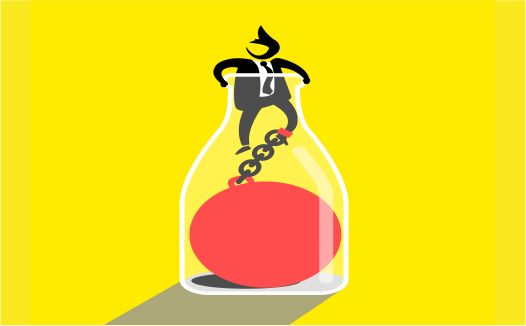
Some of the most common bottlenecks in Sales Effectiveness have been languishing in the Sales Problems folder in our Macs for quite some time now. If you ask any Sales Representative, he will nod his head in approval at us have been able to pinpoint a number of his concern areas. It is important to address each of these concerns one by one. But more important is to prioritize them. This will help us raise the Sales Effectiveness quotient a few notches higher. As it is said, a problem well identified is half done. So, topping the charts of the Sales Effectiveness Bottlenecks is a ‘Dearth of qualified leads.’ Problem #1: Dearth of total leads, which leads to a dearth of qualified leads Solution #1 To address the first, something needs to be done to increase the number of leads. The marketing team needs to focus on getting more leads, ramping up the pipeline by analyzing the current promotion mix, the spends, the spend to media ratio, the spend to lead generation ratio and so on. The team needs to do a thorough analysis on: Is our media mix right? Is our content right? Are we reaching the target audience at the right time in the right place? The analysis will throw up a lot of opportunities for improving the promotion process. This should then sort out the lead generation process for some time. OR Problem #2: Lack of a process that qualifies or disqualifies leads based on their quality. Lack of a Lead Quality Controller or a Lead Qualifier. Solution #2 This problem is more quality-based; it says that the leads that are going to sales from the marketing team are not qualified leads. This is a bigger problem and is disturbing many organizations. The leads may be good in numbers, but when measured for their ‘fit’ to the defined ‘lead’, they drastically fall short. Marketing and Sales are usually caught in a crossfire as to whose mandate this is. To resolve the issue, it is important to plant a person or a small team that acts as a Lead Qualifier. This team or person should go through the leads generated and qualify or disqualify them based on some predefined parameters. This will go a long way in helping the Sales team to save time spent on poor leads and invest time in nurturing the qualified leads, leading them closer to conversion. This will clearly help in boosting Sales Effectiveness for the organization. If you like this blog, do read about our sales transformation blog to drive business growth in 2021.
Sales Operations Demystified – Part 2

In the last blog, we saw how Sales Operations as a function was clearly misunderstood. There we read about the first two points that demystified Sales Operations. In this blog, we will read about the other 2 points that help us in understanding the role that Sales Operations plays in the Sales Organization. Helping in building a high-performance Sales Organization and Working on improving team efficiencies and execution Helping in building a high-performance Sales Organization The Sales Operations needs to work on an organizational structure that works smoothly and effectively as well as efficiently to help the sales team to deliver to its targets. Below is how the Sales Operations can make a difference. Hiring the right people: The kind of people you recruit and allow to walk in through your door can make or break your sales team and their performance. Highly self-motivated people, open-minded learners and star performers can make a world of difference, but morale -breakers can ruin the performance of an existing team too. Sales Operations needs to work with HR on laying down some good hiring practices, using some key evaluation tools to ensure you are hiring the right guys. Allocating Territories: Allocating territories can be a crucial function of Sales Operations. They need to measure the richness of territories for the opportunity, logistically correct allocation, vertical-wise allocation and a number of such permutations and combinations for the best performance. The key is to balance territories for opportunity and impact. Incentive Planning: The backbone of sales is the incentive plans. Sales are driven by incentives, this is their drive, their charge. Sales Operations needs to plan their compensation, incentives, rewards in a way that keeps them secure as well as charged to deliver. The recognition needs to be built-in too and frequencies of such programs need to be planned so as to keep the sales team motivated and positive at all times. Communications: Nothing positive can happen without communication. Sales Operations needs to keep communication flowing in and out – to ensure that the organizations’ best practices, wins, and even challenges are communicated; while ensuring feedback flows in. This helps positive action and results. Team Efficiency and Execution Sales Operations works to ensure that the sales team is spending the maximum time on building the sales portfolio. Certain things need to be taken care of towards achieving this. Inside-Out Communication: Salespeople may often get uneasy or not bothered about communicating externally or internally. They are far too focused on their core job of selling. But communication is an important part of selling and hence the sales operations team needs to look at tools that help the sales team communicate at the right time in the right way to the right people. These could be guidelines, certain templates and more, built to help them across the selling process. Bottlenecks in Processing: Sales Operations need to frequently assess, identify and correct bottlenecks in the sales process. Are the proposals, contracts going out on time, is there a check on them? These bottlenecks once removed, help in meeting the deliveries as promised while helping avoid irate customers and losing sleep and valuable time in pacifying them. Using the CRM: Sales Operations can work on helping the sales team to use the CRM to create value for the prospects. However, what is seen is that the Sales Operations spend a lot of their time in making the sales team comply with the filling in and following other to-dos about the CRM and other procedures. This can be avoided and will only help in smoothening the sales process. Time Management: Automating routine tasks and setting procedures that allow the sales team to focus more on their core area- sales, rather than getting stuck in administrative work is a matter of time management. This is where Sales Operations can help. Tools and Technologies: Sales Operations should be on the lookout for tools and technologies that can help streamline the sales process and help the sales team in managing the sales process better. Sales operations as we have seen in this blog and the earlier blog is a lot more than pure execution. It involves a lot of proactive work, strategizing, planning, as well as bridging the gap between leadership and execution.
Sales Operations Demystified – Part 1

Sales Operations are often misunderstood as that part of the sales functional structure that only focuses on the execution part. Operations as a word inherently seem to exclude strategic thinking. But seen from up close, Sales Operations not only ensures that the sales organization runs smoothly, but also plans for it; it works to see that the sales team delivers, it makes the necessary improvements as and when required and helps in scaling up the entire process smoothly. Sales Operations actually are all of what we just said and maybe even more. As Amanda O’Neill, Director of Sales Operations at AT&T puts it, “Sales Operations describes a cross-functional role that guides customers through introductory training, provides support through the sales lifecycle, and enables long-term account sustainability.” We have broken down the main facets of the Sales Operations role into 4 points, here. Setting the Sales Strategy Working towards creating Sales Excellence Helping in building a high-performance Sales Organization and Working on improving team efficiencies and execution Let’s talk about the first two points of detail and in the ensuing blog, we will talk about the latter two in detail. Setting the Sales Strategy Sales Operations is not just about the ‘doing’ or ‘execution’. It is also the setting of the ‘How to do it’ that we call as ‘strategy’. The setting of the Sales Strategy has some key elements we need to know. Here they are: Working on an effective Go-To-Market Model This model is a product of various functions coming together to zero in on the best model there can be, for that product, market, and organization. Sales Operations as a functional expert is a key player in determining and assessing the go-to-market model. What will be the friction element in the models that are being discussed, how likely will the model work as far as buyer interest is concerned? This data is best sourced from Sales Operations, thanks to their years of experience in sales organization management. Evaluation of Sales Methodologies Sales Operations Team is the team that has actually worked on the execution of the Sales Methodology. So they can play an active role in helping the leadership evaluate various sales methodologies to be adopted, based on their experience in training and compliance. Sales Operations is the function that knows which methodology has better chances of succeeding and what might fail. Analyzing Sales Big Data The Sales Operations team have their fingers on the ground data or field data. This helps them in playing a key role in deciding the structure of sales organization and the go-to-market model. Sales Forecasting The Sales Operations Team can help in Sales Forecasting as they have a good experience in knowing how to use data to predict ‘the targets that can be met’. Every sales organization tries to minimize the gap between the target and the target met; here, the Sales Operations team can play a key role. Working towards creating Sales Excellence In helping create Sales Excellence, the Sales Operations Team plays an important role. Besides helping in implementing sales training programs, the Sales Operations team can help in selecting the right approach so that the training turns into learning, into retention of knowledge and into the application of what has been learned. The Sales Operations team can help in the training of the Sales Team in: Selling Products How to get more information about the products, customer insights and thus convert the information into value for prospects. Selling Methodology How to help the Sales Team to become better at Sales Performance? What are the gaps, the bottlenecks that when removed can help the salespeople in performing better? How can Sales Methodology be adjusted for the best performance? Selling – From the customer perspective To ensure that the sales team adds value to the customer, the sales operations team may be required to help the team with the right information, insights, and training. This helps the sales team to build a reputation for themselves as a’ trusted advisor’ and not a vendor or a seller. Proactive Sales Mentoring Instead of waiting for a problem to crop up, the Sales Operations team can help with assessing areas where support is needed regularly and plan for support in advance. This will help in having a calendar of mentoring that will help in a smooth sales process. Keep an eye on the next two points, so that you know the Sales Operations function, for what it truly is.
Kickstart your Sales Team’s New High in Performance

How equipped is your sales team? What does it have that it can do better at sales? How can it improve its performance on the field? Sales enablement can act as a game changer for your sales team, or rather, the right sales enablement can. Sales enablement, to those not in the know, is a term given to a set of tasks, tools, and processes that help raise the performance of your sales team. In B2B selling, this is the need of the hour. B2B selling is not a linear process, it involves a huge investment in terms of time, patience and resources. Unlike B2C selling, where the selling norms, the rules are pretty set in their ways, B2B selling requires grit and perseverance. Right from creating a strong pipeline to identifying your warm and hot leads, to nurture them to the conversion stage, the process is tedious, to put it simply. If some activities from this process are picked up and put down in an automated module, it only helps the selling process and the sales team. This is what is typically called as sales enablement. While various companies may have different sets of tasks and tools under sales enablement, there are some guiding principles that help the team have the right sales enablement. Listed below are the proven three: Ensure your sales team has a good CRM to work with Step up the quality of the sales team hiring process Change your attitude from short term to long term Good Sales Enablement begins with a good CRM enhancer A good CRM does not alone promise or bring in good sales performance. The CSO must look out for good CRM enhancers which help you mine the data fed in the CRM. A good CRM enhancer typically fetches a higher number of leads, more proposals and quotations dispatched, more conversion from leads and therefore, the highly celebrated target-achievement of the sales team, sometimes even beyond expectations. Most CSOs have to ensure that they leverage their CRM and use the CRM enhancers to enhance their team’s performance. Good salespeople help in Sales Enablement Having good salespeople in your team is an outcome of the right hiring process from targeting to selection as well as the right talent development with respect to clearly identified sales objectives and sales gaps. Not to be missed are the sales remuneration and incentive packages and process improvement, in a reverse order as may befit the organization. Sales mastery is most certainly not the role of one man or woman. In fact, each of the team members of your sales force can develop skill areas in sales enablement based on their interest, experience, gaps in the skill sets and the needs of the company. From the sales team, members may choose to become sales coaches, sales talent hunters, and acquirers, remuneration designers, CRM managers or any other role seen as a good fit. Some team members may choose the overarching mother-role of the sales enabler directing the entire team towards being better sales enabled. With a concerted effort such as the above, the performance of the sales team improves multi-fold. Changing your attitude from short term to long term B2B selling never was and never will be a short-term process judged by the sheer length of the buying cycle it typically entails sales, therefore, has to be looked at as a long-term investment, enablement, and improvement. Buyer profiling should not be restricted to online personas but should be made real through a face-to-face interaction between the salesperson and the buyer. This will aid the buyer data that is fed into the CRM, match the real buyer closely, which will help the sales team in its process from targeting to conversion. Sales enablement and sales transformation will pervade the entire sales process from the content function to the channel function to the demand function. The sooner we realize this and start taking action the better. Explore the complete guide to Cross-selling and Up-selling to identify unexplored opportunities for your business as well as your clients’ business and grow better in 2021.